

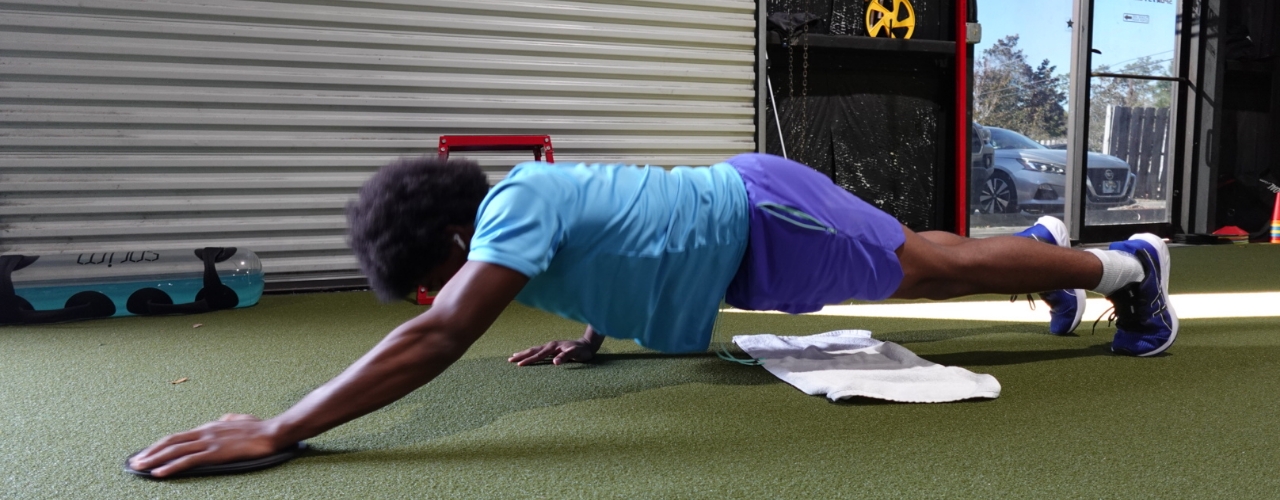
“The Greatest Ability Is Availability.”
Although there are no physical or physiological reasons not to appropriately train at a young age, our system lends itself to a more physically, emotionally, and psychologically mature cohort. Age is considered but this also has to be accompanied by some other factors which can slightly vary the starting point on an individual basis. The assessment will first determine a client’s readiness to train at Tork Sports Performance.
Our assessment utilizes a comprehensive list of scientific literature citations, to best address potential movement faults, as they relate to an increased injury risk. Range of motion, specific accessory muscular strength, orthopedic special testing, fundamental movement patterns, and sport/position-specific yellow and red flags are each evaluated. We will identify any red flags for risk of injury and address any deficits in movement quality. As with any well-structured performance program, the development of strength/power is a product of a comprehensive approach to movement and neural/muscular adaptation. These assessments are used to structure programming for each athlete based on their specific weak points and limits to optimal performance. If outside medical consultation is recommended we have a strong network of providers to communicate with.
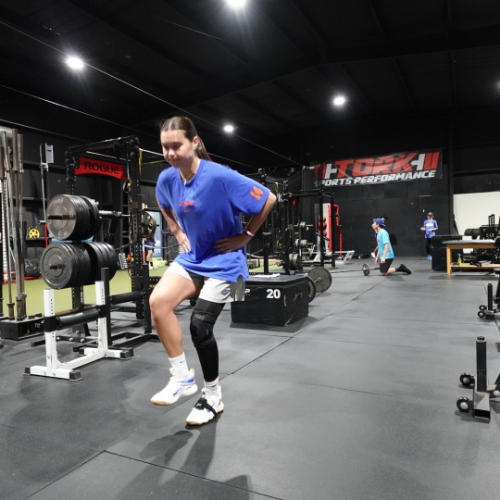
“That Which Gets Measured, Gets Managed.”
Training is broken down into mesocycles which bias physiological adaptations for a certain period of time. We will use tracking devices to monitor fatigue, RPE, and bar velocities in order to maintain certain training adaptations. Training begins with a focus on movement literacy. Focus on motor control, tendon stiffness, soft tissue mobility, and joint stability must guide the rest of the programming. Safe and efficient patterns are the product of a powerful system that can move freely. Improving an athlete’s movement and joint control/stability allows long-term progression of transferable strength and power.
Once movement literacy and motor control are adequate, training progresses to the strength/power development phases. A concept of programming for athletes is vertical integration. This training concept can be explained as “programming where all facets of training are performed throughout a training cycle, but in various volumes/intensities, in order to achieve more specific results within each block.” Training will be both undulated and autoregulated to gauge stress and attempt to optimize adaptations without unnecessary fatigue. A brief overview of the role of resistance training in a comprehensive athlete enhancement program is as follows. Maximal strength is the building block for all other athletic feats and powerful displays in sports. The use of eccentric overload and tempos produces adaptations as we focus on increasing load with lower accepted mean bar velocities (m/s). Eccentric loading helps increase movement patterns, stresses motor control, increases Titin buildup, and improves the Rate of Force Acceptance. The isometric tempos increase motor learning and challenge the athlete to stabilize under load in shortened to lengthening disadvantageous positions.
Following an athlete’s demonstration of prerequisite motor control, maximal strength, and accelerative strength; training can shift focus to improving sport-specific demands. Sport specificity is achieved first and foremost by competing and training in a sports environment. This training cycle’s goal is to mimic the planes of power, speed, and velocity expression. The speed-strength, power, and speed qualities of the force-velocity curve are the most similar to the rate of contraction used in athletics.
Training mesocycles lay the foundation for the transition down the force-velocity curve. Layered training allows for the most aggressive gains in athletic improvement, and allows for a synergistic effect of muscular and neural adaptation. As maximal strength plays a major role in the foundation of expressing speed and power, it is often the most crucial for younger athletes. Individual athlete profiles determine the amount of time spent in each block and at which specific volumes. Additionally, position demands, player goals, and current game weaknesses are addressed in each training cycle. As training progresses to focus on increased specificity of movements, as well as increased bar velocities, to increase power; a concurrent increase in sprint, acceleration, and change of direction work will be added to programming. Reactive ability, tendon stiffness, and maximal force output are all required for increased change of direction rate and sprint/power performance. Speed and explosive work will be individualized on a per-athlete basis.


Real Athletes.
Real Results.
See How Tork Transforms Athletic Performance
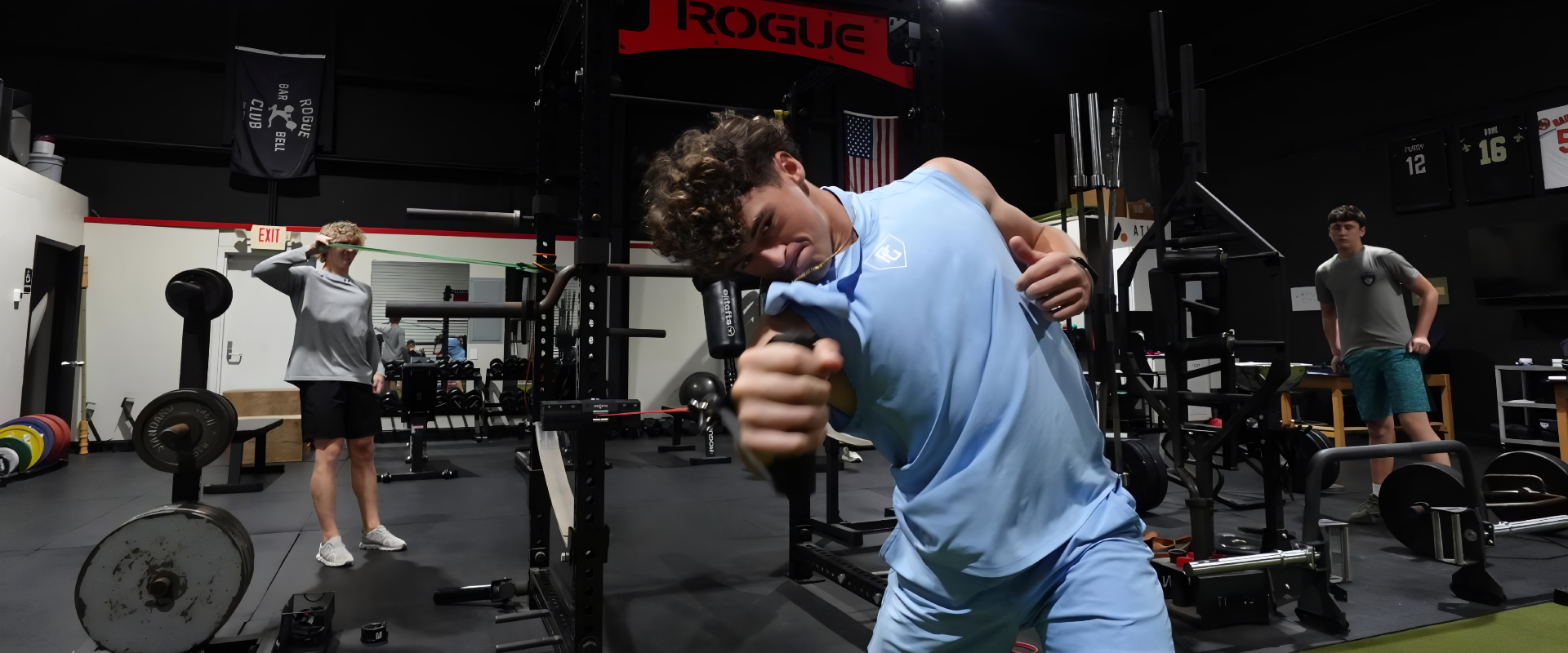
From high school prospects to collegiate standouts and recreational athletes, our athletes trust Tork to take their game to the next level. See their stories and discover what’s possible for you.
-
Training at Tork had a direct impact on my strength and pitching velocity. Super glad I trained with them and would recommend to any athlete.

Andrew W.
-
Great facility and amazing trainers. This is the place to go if you are a dedicated athlete with serious goals. Going here improved my strength, power, and explosiveness for wrestling substantially. Highly recommend Tork to any athlete that wants to be great.
Jacob W.
-
Great gym with awesome trainers! Taught me how to work out safely while also helping me put 30 pounds on! Did a great job of adding to my speed and strength for baseball!
Evan
“Tork Sports Performance Is Not A Gym And We Do Not Workout.”
Tork Sports Performance is a training facility where we aim to maximize individualized athletic potential. Our program design and the facility are not for everyone. We take a detailed approach to assessments and training and expect the same effort and detail in return from each client. Training times and grouping will be discussed following the assessment as we decide which option and time would best serve the athlete. The pricing structure is a product of training frequency, duration, and ultimately which group is best suited for each athlete.